Sept 29
Scripture: Colossians 2:9–13
For in him the whole fullness of deity dwells bodily, and you have been filled in him, who is the head of all rule and authority. In him also you were circumcised with a circumcision made without hands, by putting off the body of the flesh, by the circumcision of Christ, having been buried with him in baptism, in which you were also raised with him through faith in the powerful working of God, who raised him from the dead. And you, who were dead in your trespasses and the uncircumcision of your flesh, God made alive together with him, having forgiven us all our trespasses.
Meditation
From his article, "The Canticle of Creation: Unravelling our Eucharistic Identity," by Anthony M Carrozzo OFM
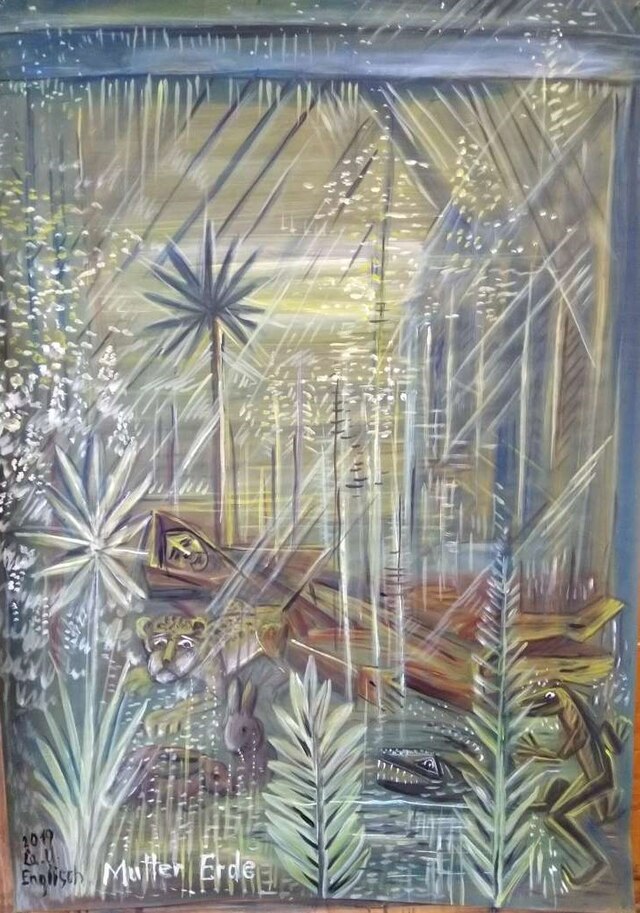
In this Canticle, Francis unites us to God through the discovery of our unity with all creation. No longer is creation a vague outsider to our faith, for Francis now calls air and water, weather and fire and even the earth itself our brothers and sisters and, yes, even mother. Consider the intimacy with all that is. No longer are we denying the senses but we are using them to lead us to discern God in all around us. This is yet another expression of the Poverello’s principle that the world is our cloister. Ilia Delio reminds us to spend time in creation to discover this transformative presence. She even suggests we take a simple leaf, place it our hand and contemplate its value to God and, therefore, hopefully to us. Such an image evokes the Eucharistic reality in which we live. It is no longer a twenty minute Mass but it is in the very air we breathe all day and night. Where did Francis learn this? At Greccio and at La Verna.
The message from Greccio is profoundly simple: the reality of the presence of Jesus as a humble child to be embraced and protected. Anthony of Padua got the message loud and clear, so much so that traditionally he is seen holding a book on which the child stands. We are reminded of the importance of listening to the Word until it becomes alive in us as it did in Francis.
The experience at La Verna was the same as the experience at Greccio, but while Greccio revealed the Incarnation, the Stigmata revealed the significance of the Passion of the Lord. Both are experiences of being united in love to Christ.
We Franciscans experience these events within ourselves as a people who live in a Eucharistic atmosphere. The Canticle is our Eucharistic prayer when we acknowledge and strengthen that experience. The Canticle ends with these words: ‘I give thanks to you and I will serve you in all humility.’
That was the message Cardinal Antonio Tagle preached at the Eucharistic Conference when he said: ‘The Mass is ended, go, go, go, go into the world where you are and contemplate the concern, what difference does the Eucharist make to and for our lives?’ When we consider the question the only answer I can come up with is that the Eucharist is our sacrament of unity. For me this is the only word we really need. It is the sacrament that brings us together, forming us to be a union. There are so many divisions around us, perhaps even within us, but when we receive the Eucharist, we not only receive Christ, we also receive one another in Christ. This is the mystical body of Christ in action. The host is not given to us to adore but rather to embrace, discovering what we mean to one another while acknowledging those we would prefer not to include, asking ourselves why Christ can embrace them yet we cannot. Communion is our sacrament of relationship. Our unity informs us so we receive communion with our eyes opened seeing those with whom we are united at this moment. We do this in memory of Christ, so with Him we are in relationship with the world around us. We are sent forth to be signs of Christ’s loving embrace of all that is created for Him by the Father.
Musical Selection
Prayer